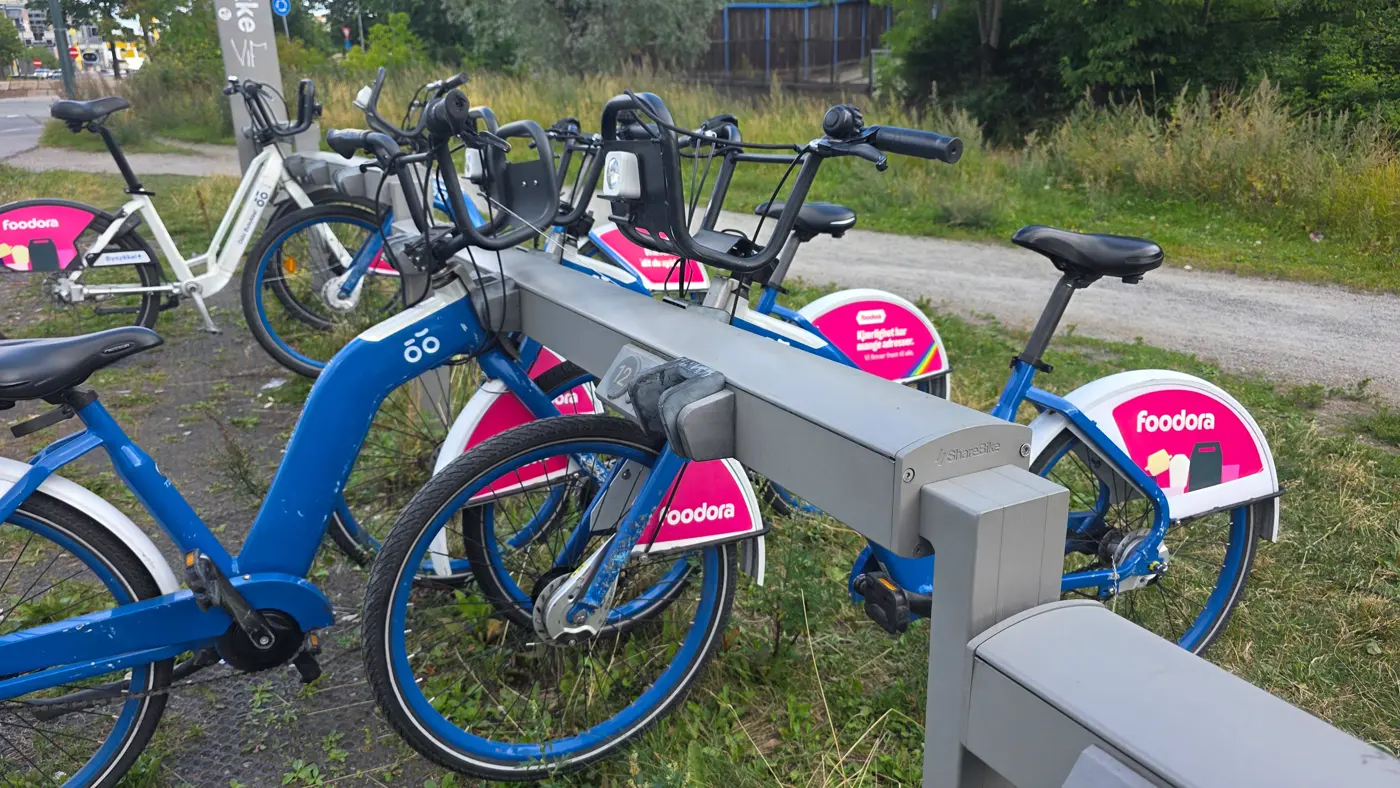
A description of the service.
My product/service is The Oslo City Bike Scheme: A local bike-sharing service I am proud to have in my city. Oslo has become more sustainable throughout the years, welcoming more bike-friendly paths in the city. This makes people engage more in this environmentally friendly service with 266 stations and 3,000 bikes spread across the heart of Oslo. A bike user can ride for an hour or extend the ride by an additional 2 hours for a very small amount every 15 minutes. Even in a hilly city like Oslo. The Oslo City bike is a cheap, eco-friendly transportation option.
What problems does Oslo City Bike seek to solve?
The Oslo city bike scheme seeks to solve problems such as the following:
- “The last mile problem”: Can be avoided with this service when traffic jams arise, and other sudden challenges take place on the busy city roads. Oslo City Bike will therefore create a safe gap in Oslo's public transport network.
- Bike theft: This is a very common problem in Oslo. Every day there is at least one private bike to spot that has vital components missing: Bikes with missing parts still attached to a bike rack or bikes dumped in a river, with or without missing parts. Oslo City Bike lets users avoid high costs, maintenance and the fear of getting their private bike stolen by using this bike scheme instead. Not everyone can store their favorite bike in the city, and even storing a bike in a safe garage can still be a risk to take. That is why it is great when Oslo City Bike “removes” the ownership.
- Reduction of cars in the city centre leads to bigger bike pathways which again helps for a safer, cleaner and more active urban environment. When I lived close to the palace park, having a balcony facing a one-way driveway, I could easily notice layers of gasoline pollution gathering on my balcony. This definitely helps reduce the amount of pollution and improve air quality.
- Oslo is known for steep hills and roads in general, making it a somewhat challenging city for people who want to bike or run. That is why white electric bikes are included as an option that solves the physical exertion required for people navigating Oslo’s steep roads and hills.
- The cost of using the service is very low, as opposed to taking public transportation or owning a car. You can pick up and drop off a bike almost anywhere in the City.
The primary users of the solution.
An estimated 55,000 unique active users take trips annually.
Primary users can be:
Daily commuters and workers in general:
- They tend to experience delays in public transits and might go to the nearest docking station to grab a bike.
- They want some fresh air on their way to the office, using Oslo’s friendly bike routes, but they still want to be quick enough for the morning coffee with their colleagues.
- Some might use the service to travel between meetings in the city center during working hours.
Residents living within specific public transit zones:
Being a resident myself living and working in zone 1 for almost thirteen years, a zone that covers all of Oslo and inner municipalities like Bærum, including the entire metro system, I can with my hand on my heart I have used bikes for quick errands, shopping, shorter trips for fun or socializing in central neighborhoods and parks.
Evaluating the solution against the five humanity-centered design principles. To what extent does it meet the five principles of humanity-centered design?
Focusing on the ecosystem:
It has a well-designed structure and aligns well with Oslo’s transport ecosystem. The service does benefit the environment by reducing car usage, traffic congestion and emissions. We can clearly see that transportation affects people, the city, and the environment as interconnected systems.
However, the scheme wouldn’t be as effective if it weren’t for Oslo investing heavily in bike lanes and cycling infrastructure in general.
Solving the root issue:
The goal of Oslo City Bike is to reduce the dependence on private cars and lower transportation costs. People do not need to stay afraid of losing their bikes to theft. Not only that but being a bike owner also requires maintenance.
That said, I will not say that it solves deeper urban planning challenges. There are still inequalities in access to the service in different parts of the city, and it is apparent that certain bike stations have fewer bikes than others, or none, because certain people prefer bicycling downhill only, causing congestion in the city center on certain bike stations.
Take a Long-Term Systems Approach:
The Oslo City Bike Scheme has a long-term goal, and that is making Oslo a more sustainable and livable city. It does not aim for a short-term fix only. The service contributes to lasting behavioral and environmental change.
The service offers people a sustainable option in their everyday life. It has solid roots in the city and it still grows to this day: The Oslo City Bike Scheme is excellent because it encourages physical activity and makes active transportation much easier.
The success of the service is dependent on ongoing investment in infrastructure, maintenance and expansion to new areas as Oslo becomes bigger.
Test and Refine Designs
Since the opening of The Oslo City Bike Scheme in 2003, with around 1000 bikes across 100 stations, it has since grown massively. It was later in 2016 upgraded with a brand new, modern system with app-based unlocking. The old set-up was completely replaced.
The number of stations, bicycles, digital features, and service coverage have been adjusted based on user needs and city development. The service is certainly improved through feedback and real-world use.
A challenge I still see with the service is that it could be improved even more with broader feedback to improve accessibility for the elderly, tourists or people with disabilities.
Work with the Community, Not for Them
The service is designed around the needs of me and the rest of the community in Oslo. Its success relies on how we use the bikes and interact with the city’s transportation network. Our behaviour as users, along with our demands and feedback, have influenced station placement and service improvements.
I do believe that community involvement could be increased by allowing residents to have a bigger influence on where the stations are located or how the service is supposed to be in “discarded” areas.