All work

Selected work — Game & product design

The Pyramid.

Designing a complete board game experience, from concept to production.

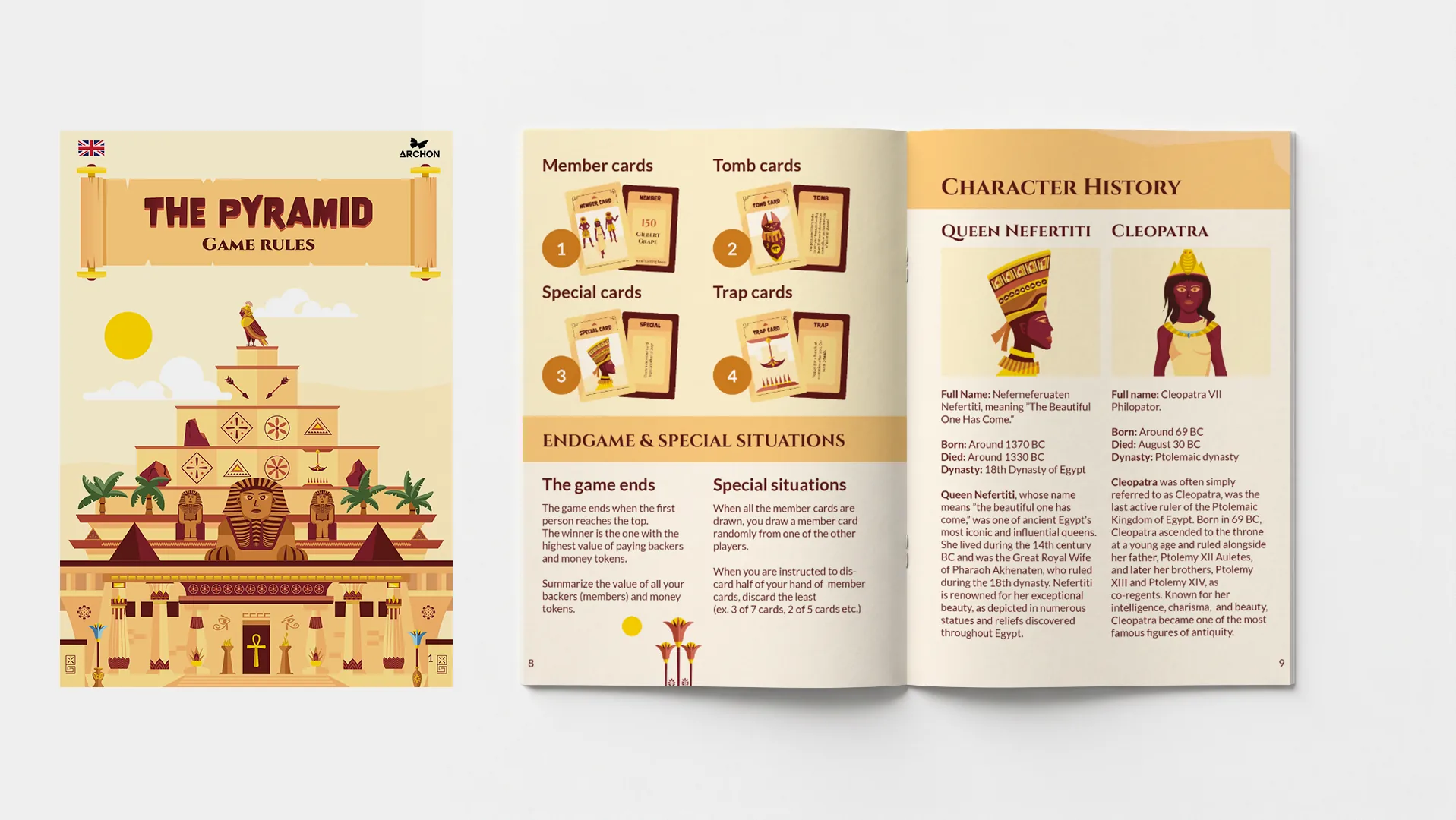
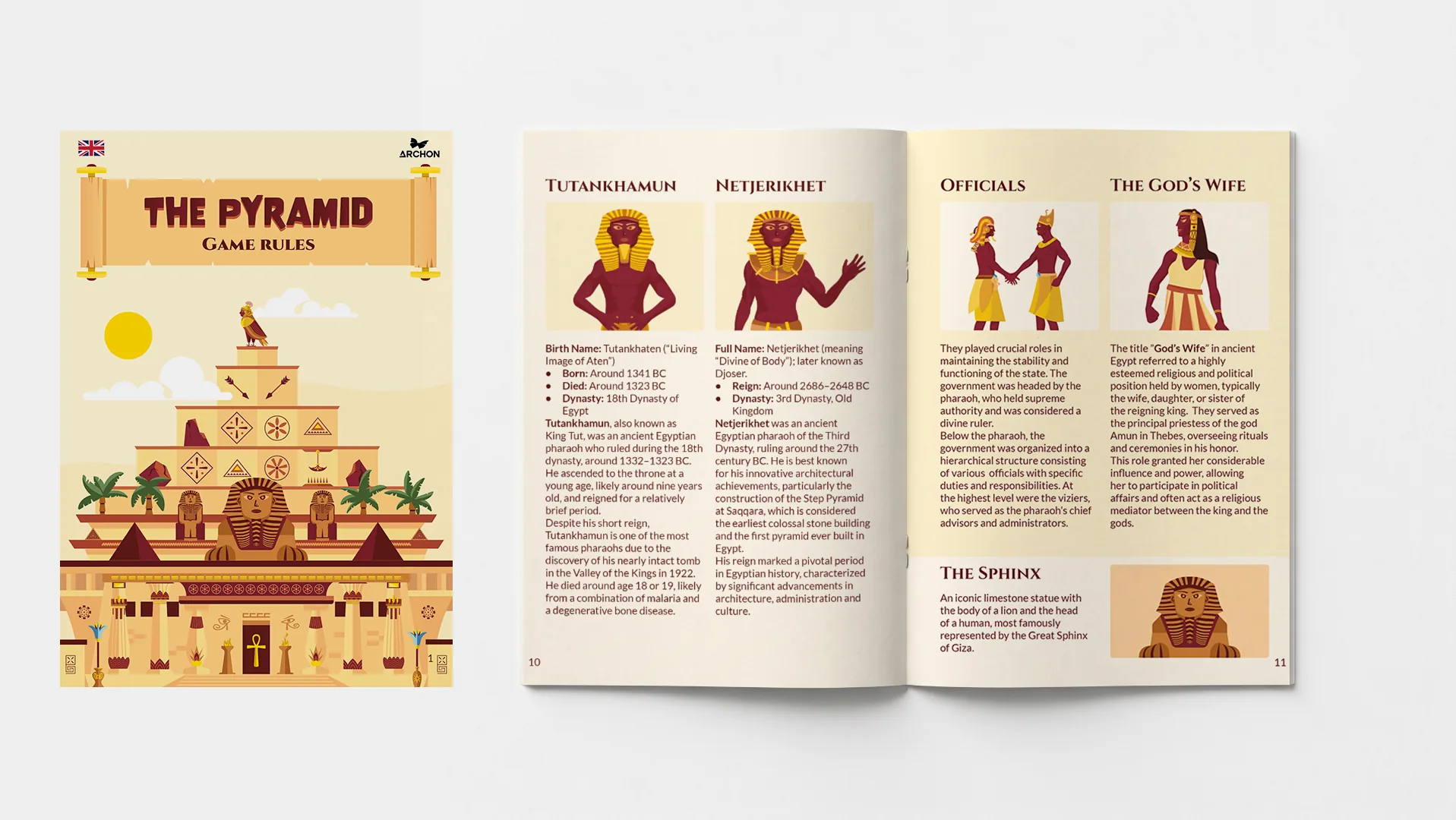
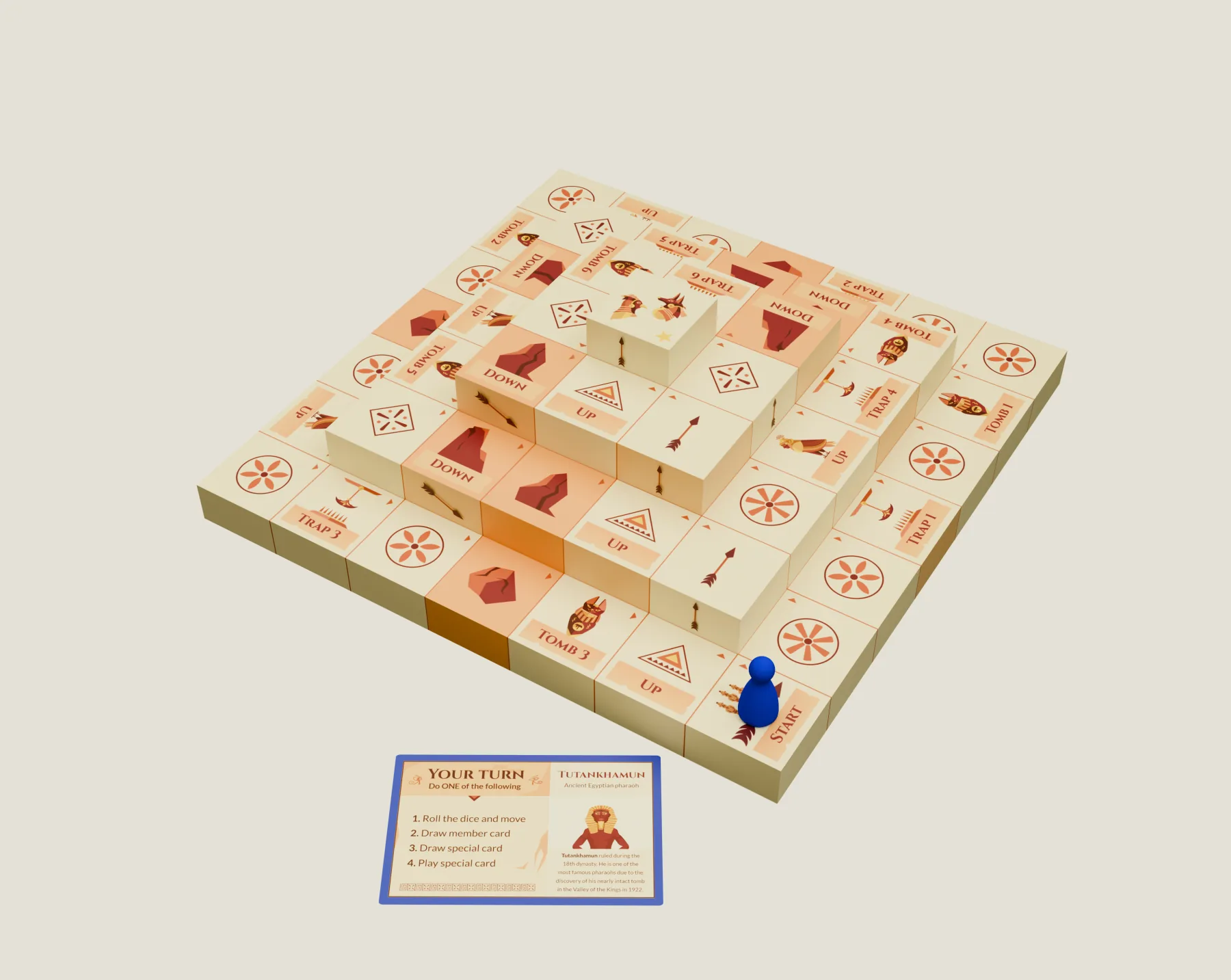
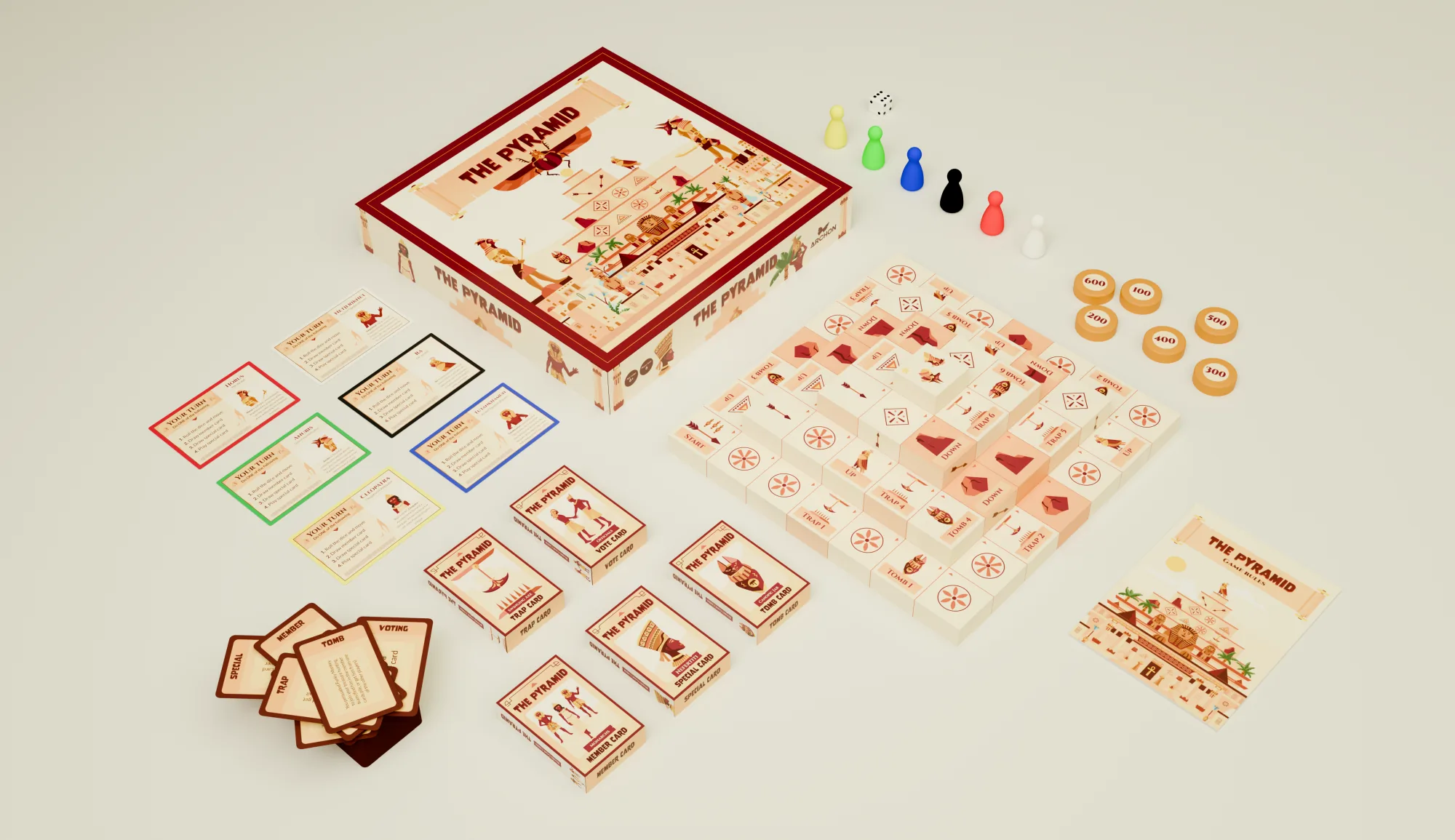
A board game inspired by ancient Egypt, designed from concept to production. The project combines game mechanics, visual identity, character design, illustration and information design into a complete player experience.

Client
Agames
Role
Game design, visual design & worldbuilding
Deliverables
Concept, cards, rulebook, illustration, production
Year
2026
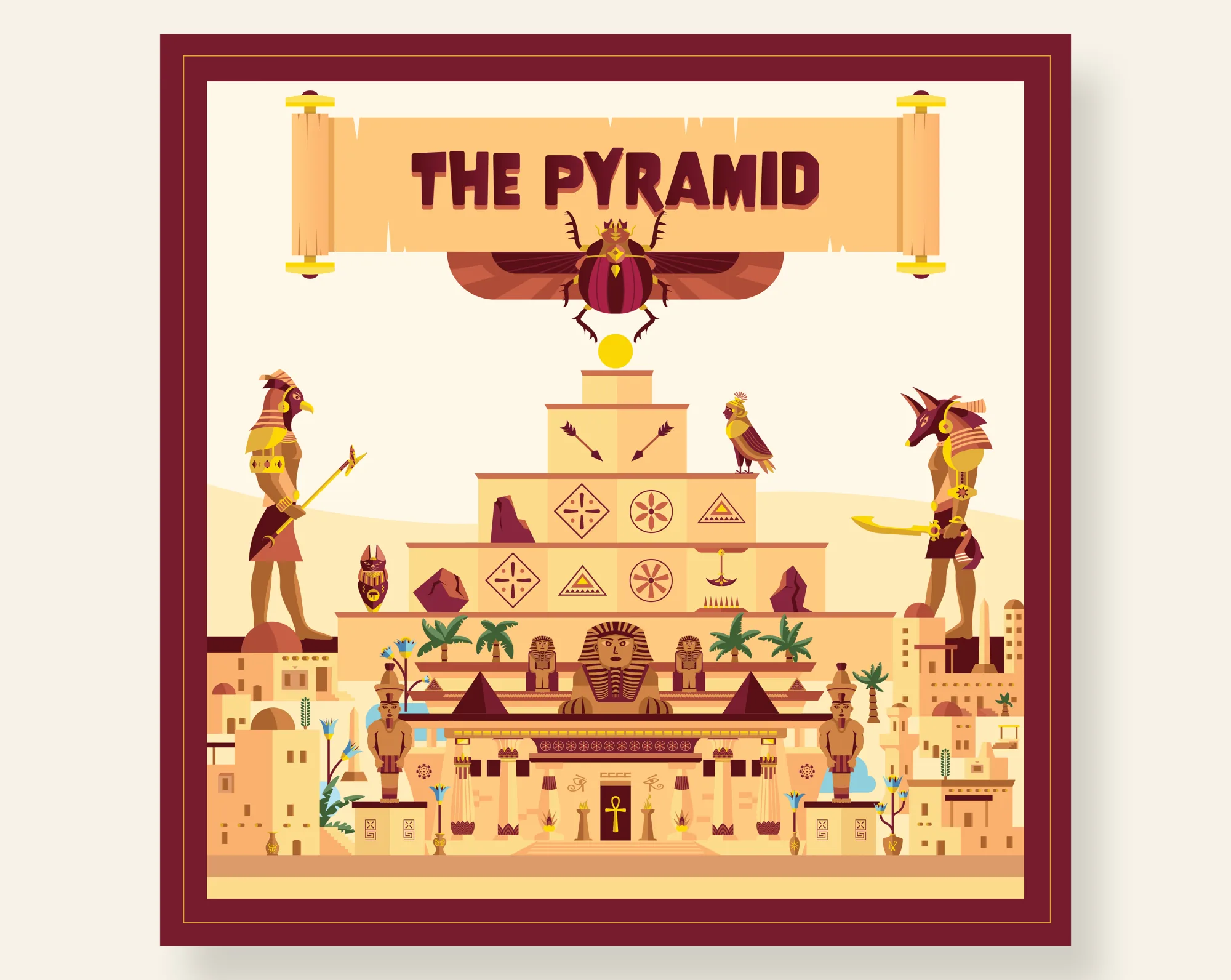
The Pyramid — box art with the winged scarab, the step pyramid, and the gods Horus and Anubis
The box — illustrated cover

01 — Overview

One world,
built to be played.

The Pyramid is an original board game project inspired by ancient Egyptian mythology, exploration and strategy.

The project began as an idea for a thematic tabletop experience and gradually evolved into a complete game system with its own visual identity, characters, illustrations, symbols, cards and supporting materials.

My goal was not only to create a functional game, but also to build a cohesive world where mechanics, storytelling and visual design work together to support the player experience.

02 — The challenge

A lot to learn,
fast.

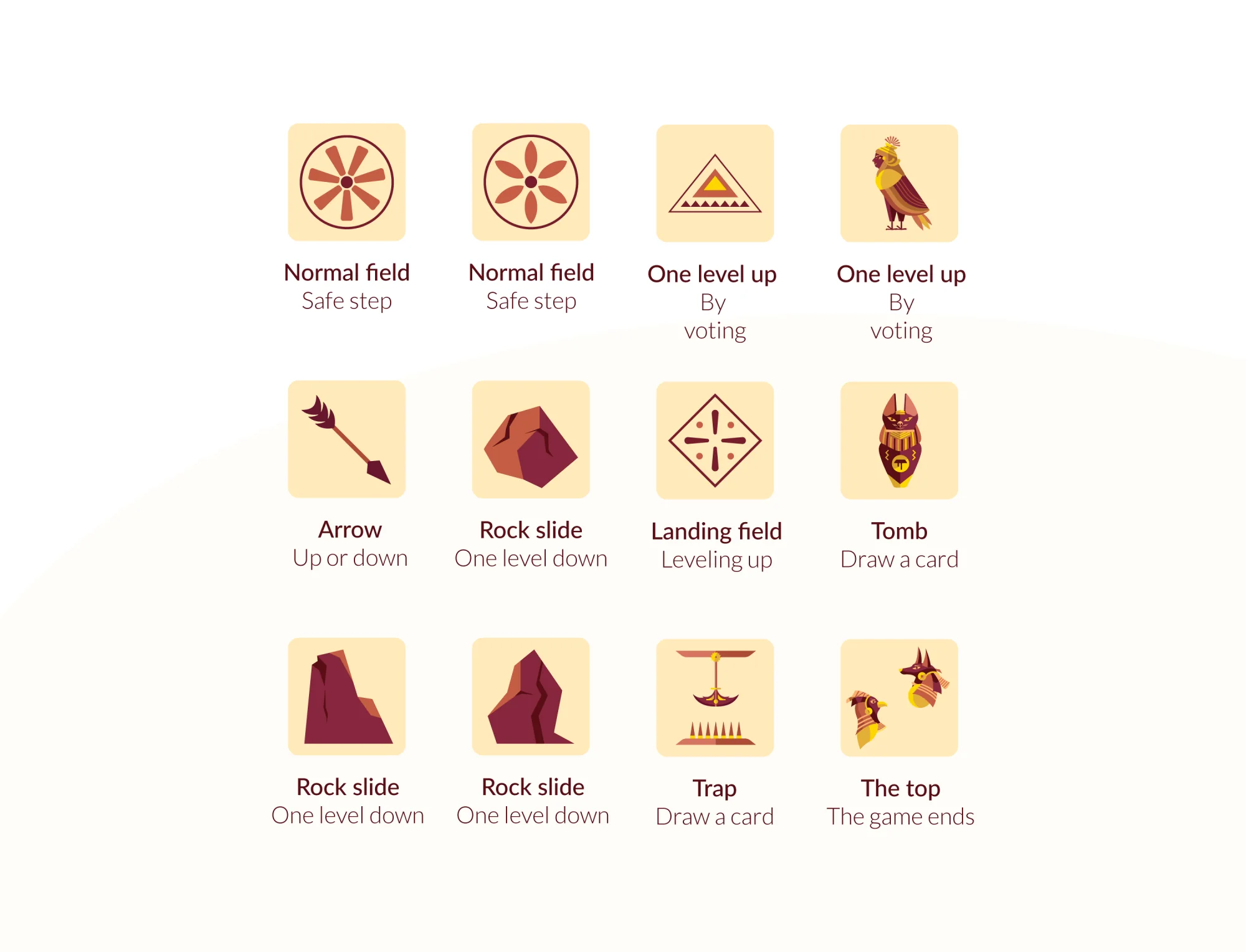
Board games require players to process large amounts of information. Rules, symbols, cards, characters and game mechanics must all be understood quickly while remaining engaging and visually coherent.

The challenge was therefore both creative and practical:

  • How can visual design support gameplay?
  • How can information be organised without overwhelming players?
  • How can an original theme remain consistent across all components?
  • How can artwork, rules and mechanics become part of the same experience?

03 — My role

One project,
every discipline.

This was a multidisciplinary project where I was responsible for the complete design process. The work included:

Game concept

Developing the core idea, gameplay structure and player experience.

Visual identity

Creating the visual language inspired by ancient Egypt.

Character design

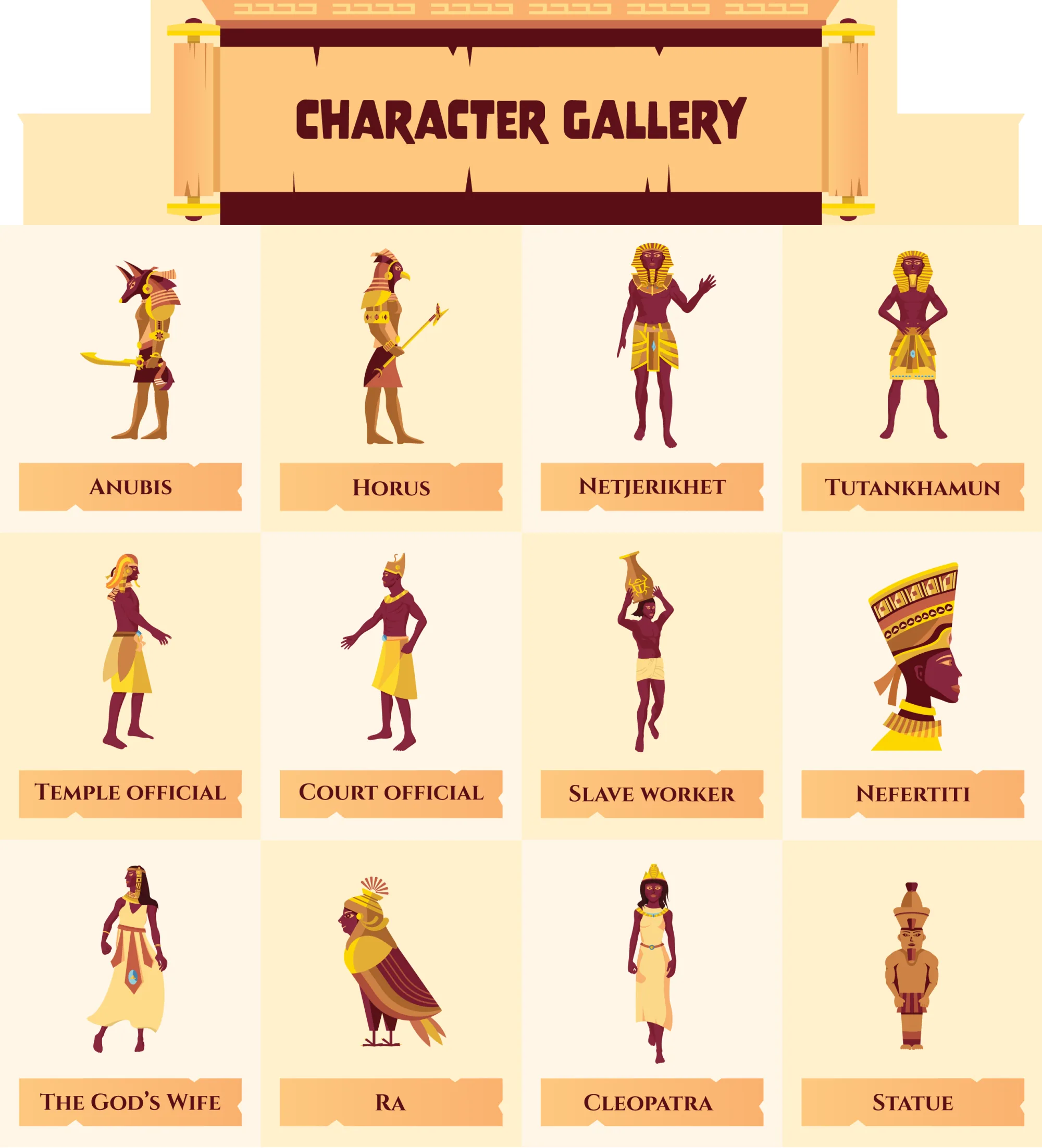
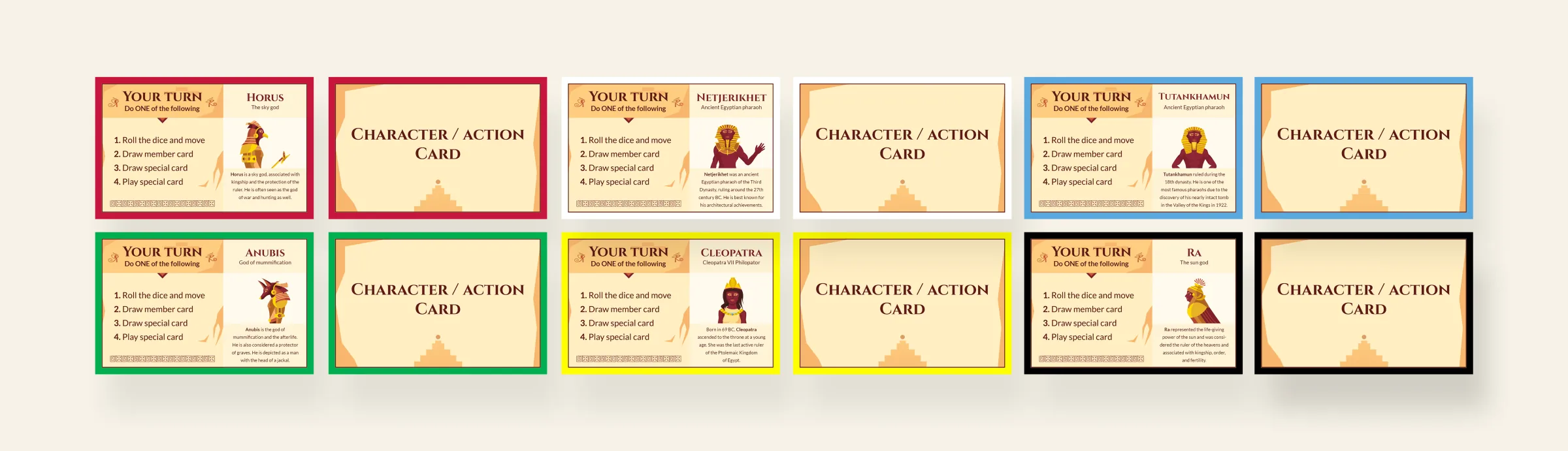
Designing original characters and defining their visual personalities.

Illustration

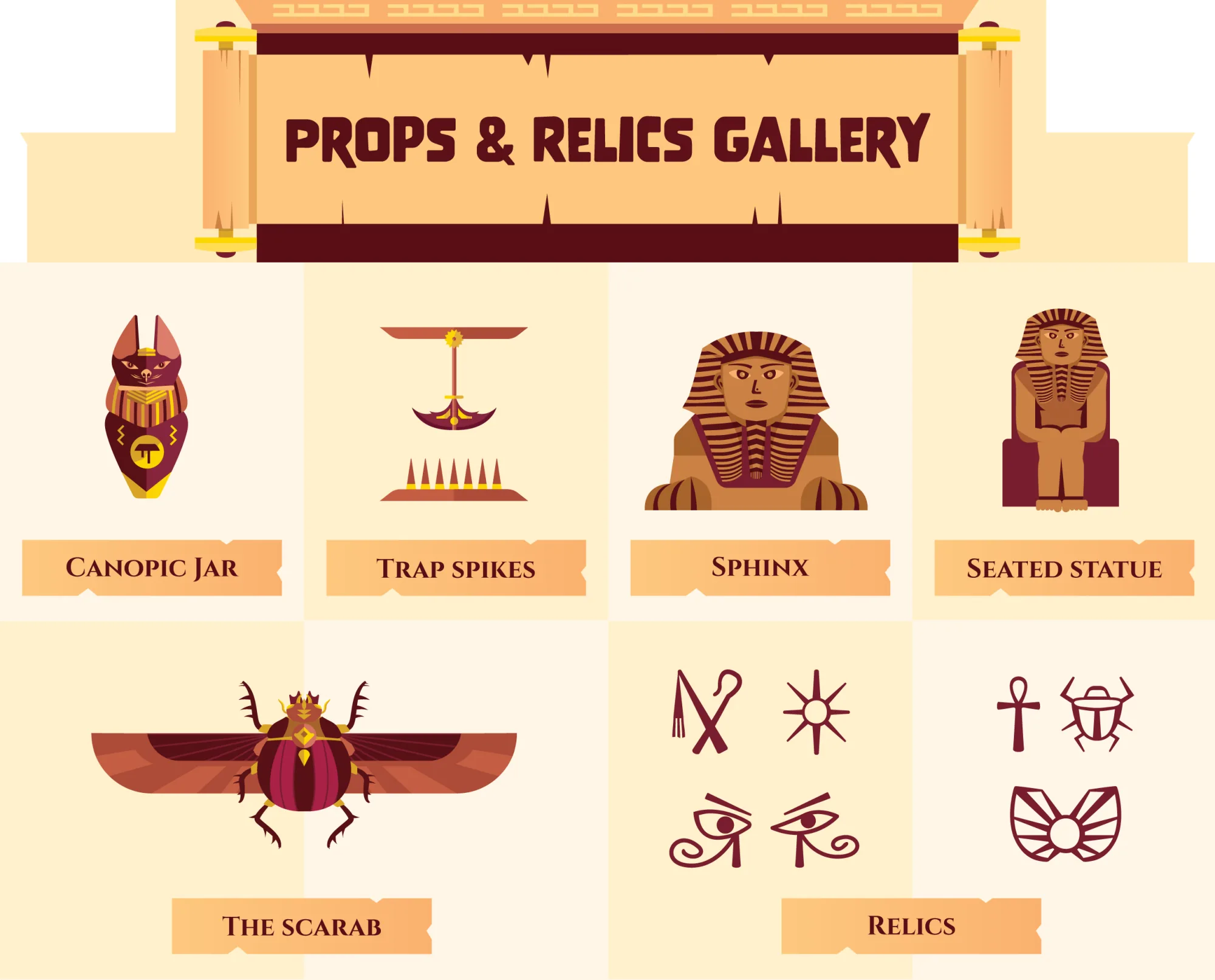
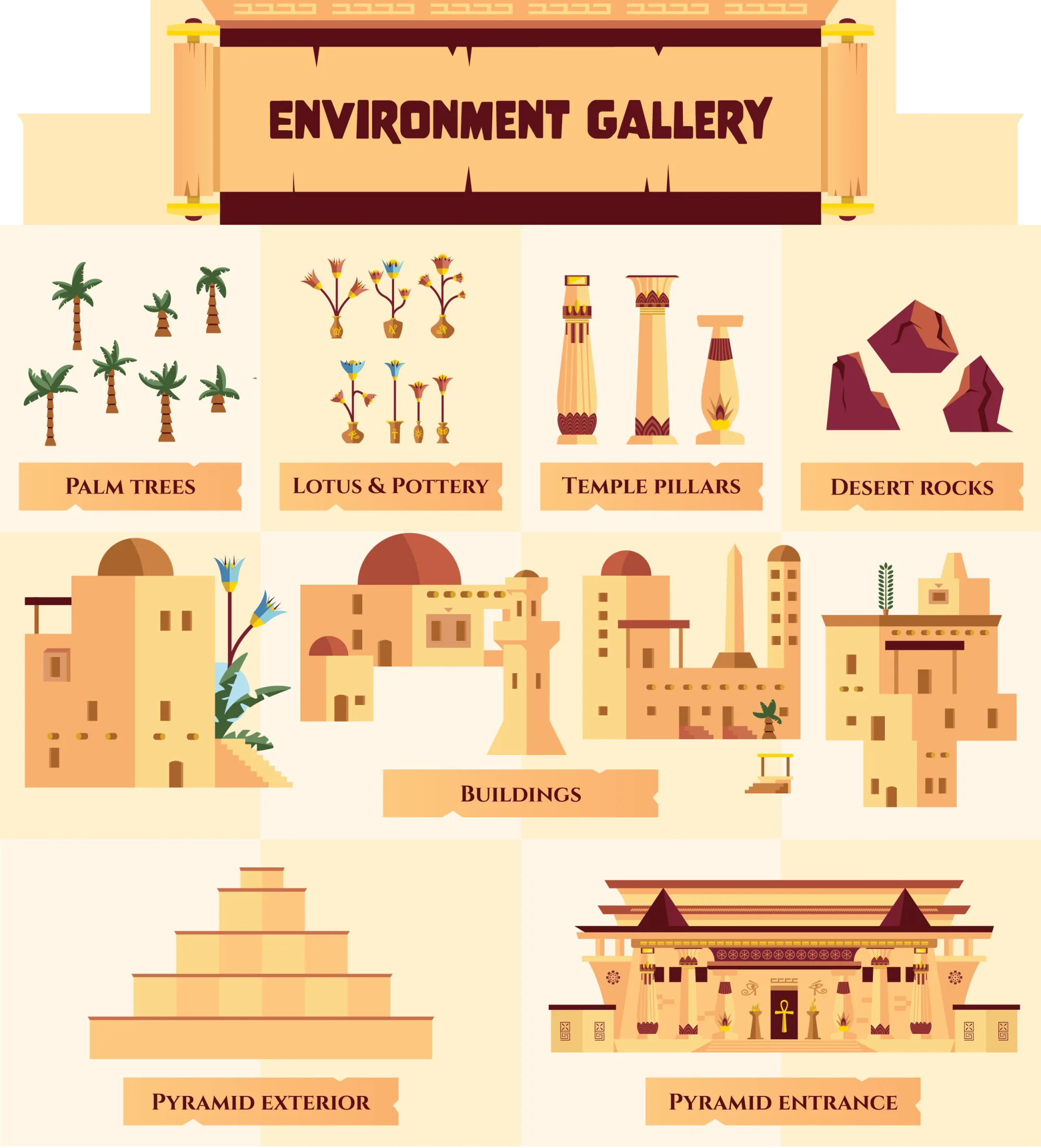
Developing artwork, environments, symbols and supporting graphics.

Card design

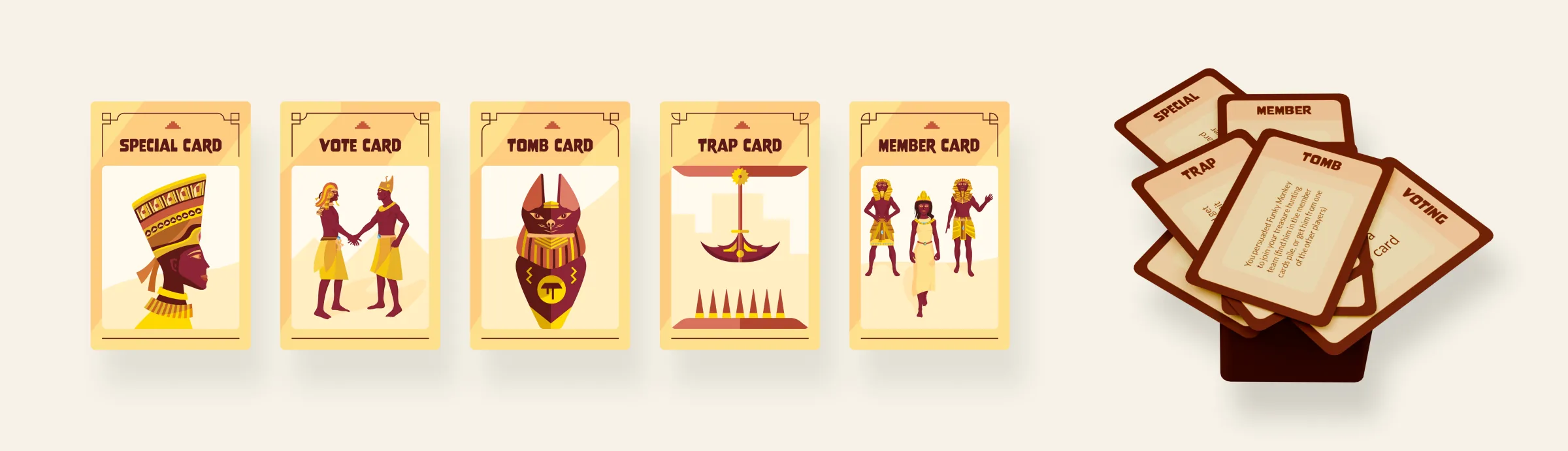
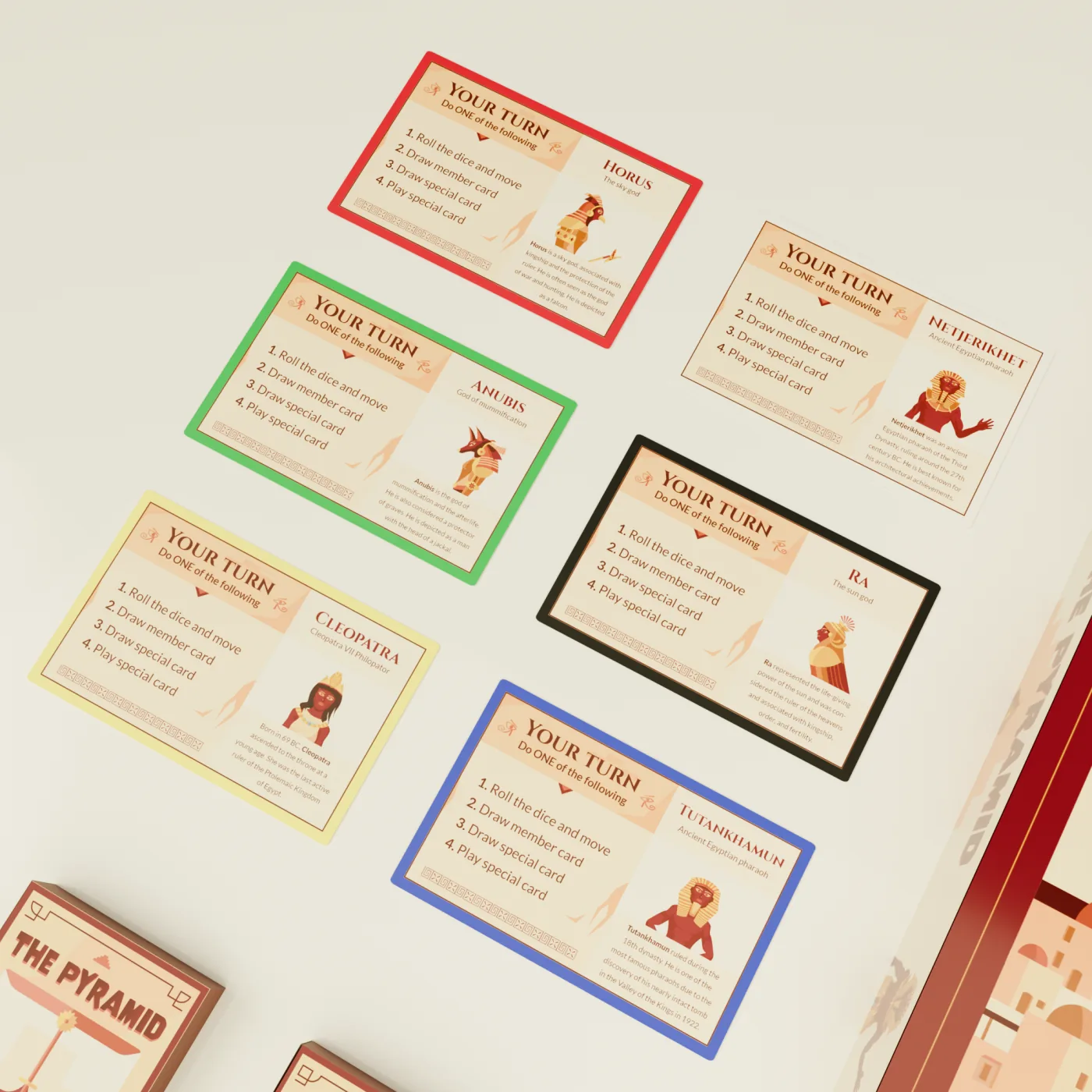
Creating layouts that balance clarity, aesthetics and gameplay requirements.

Rulebook design

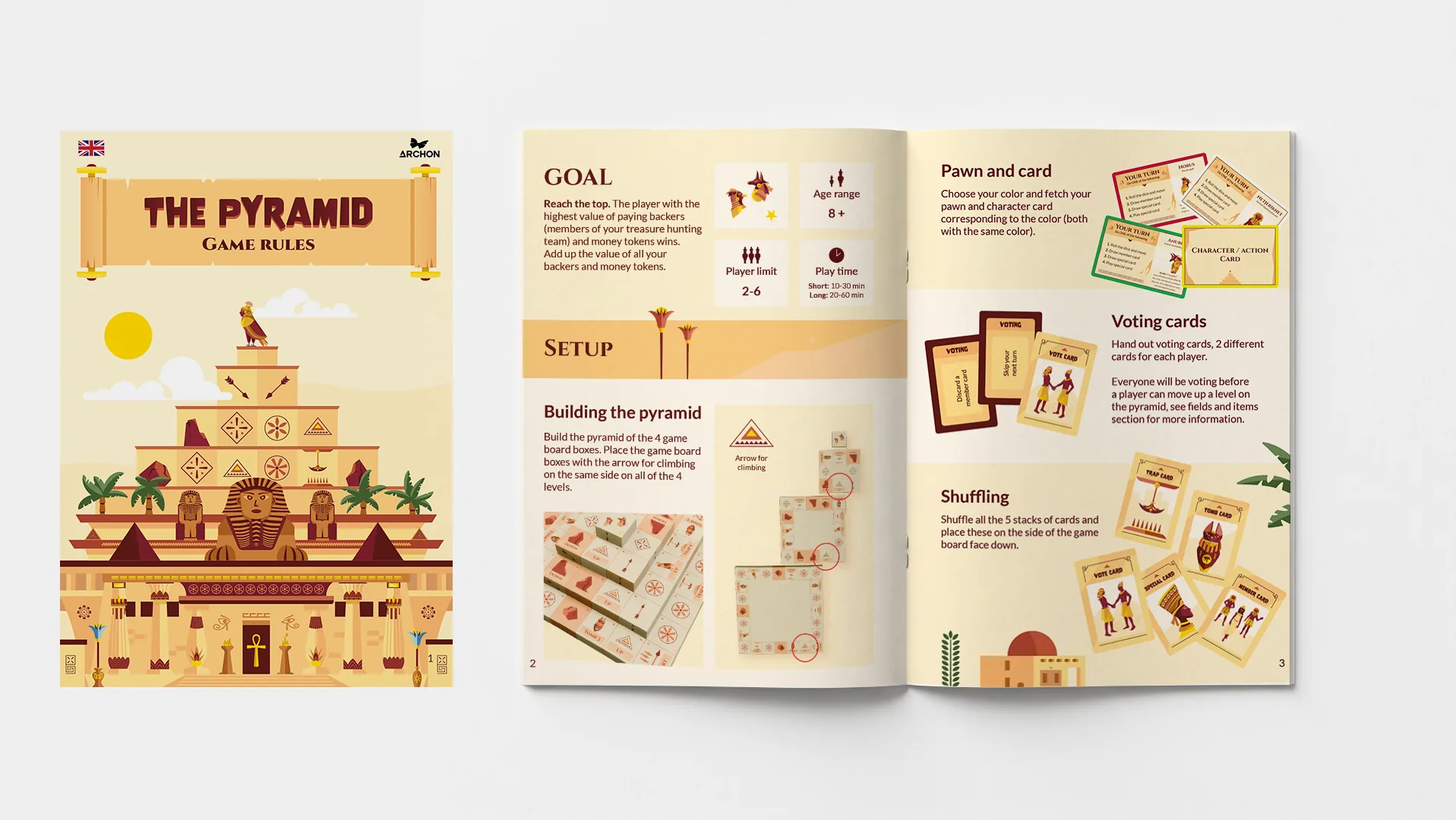
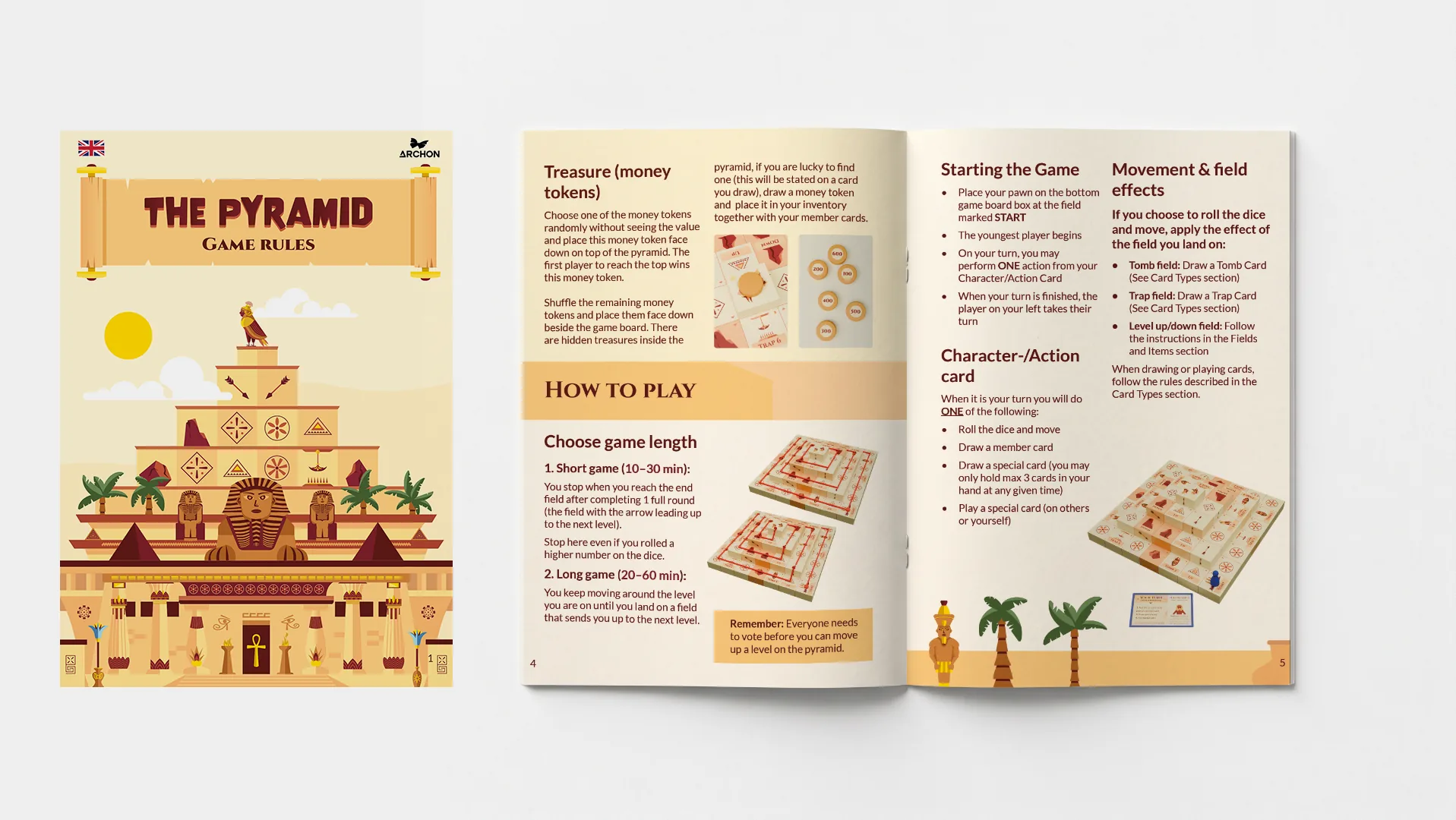
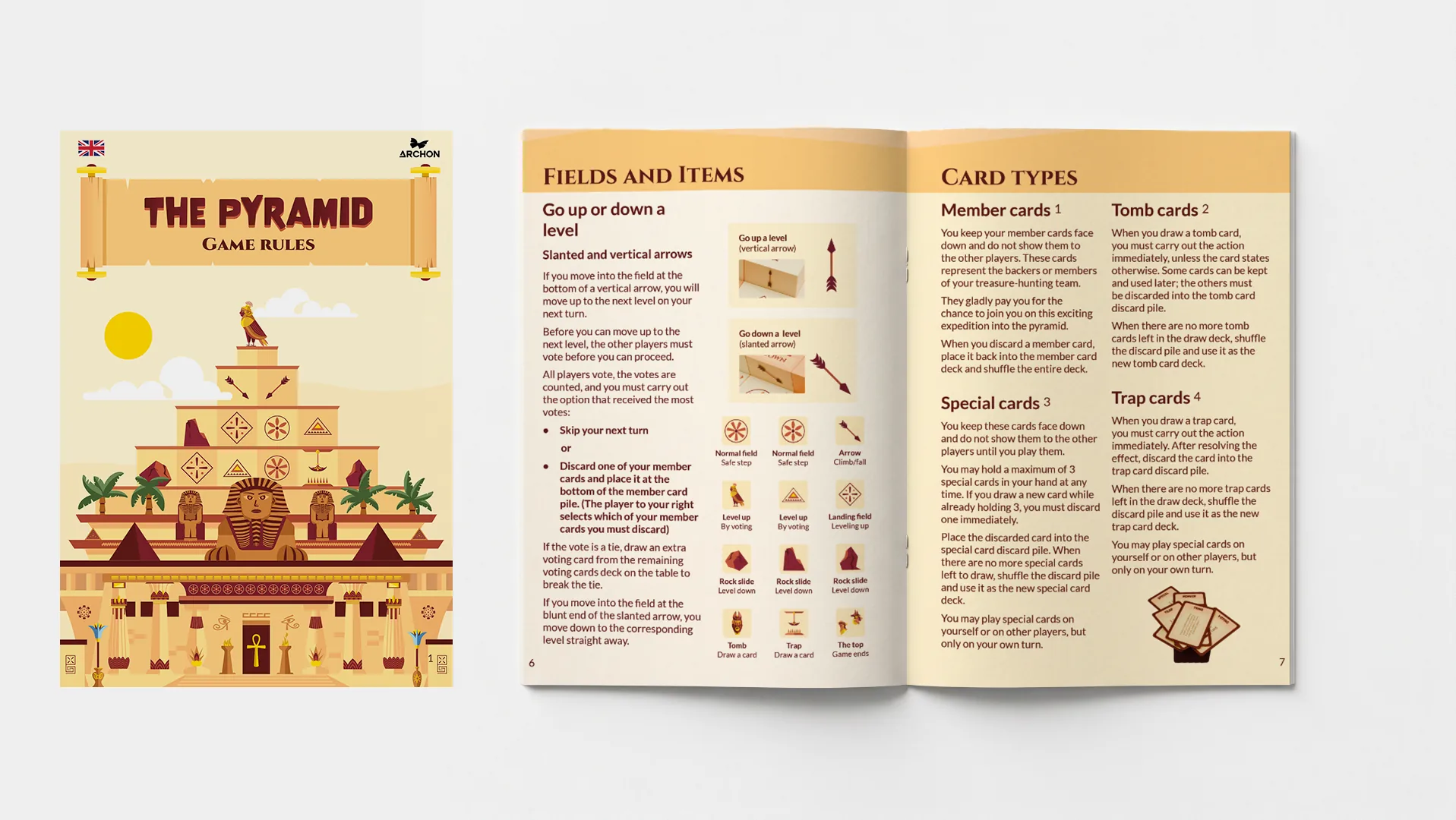
Structuring information to make learning the game intuitive.

Production preparation

Preparing files and assets for physical manufacturing.

04 — Designing a world

Everything from
the same place.

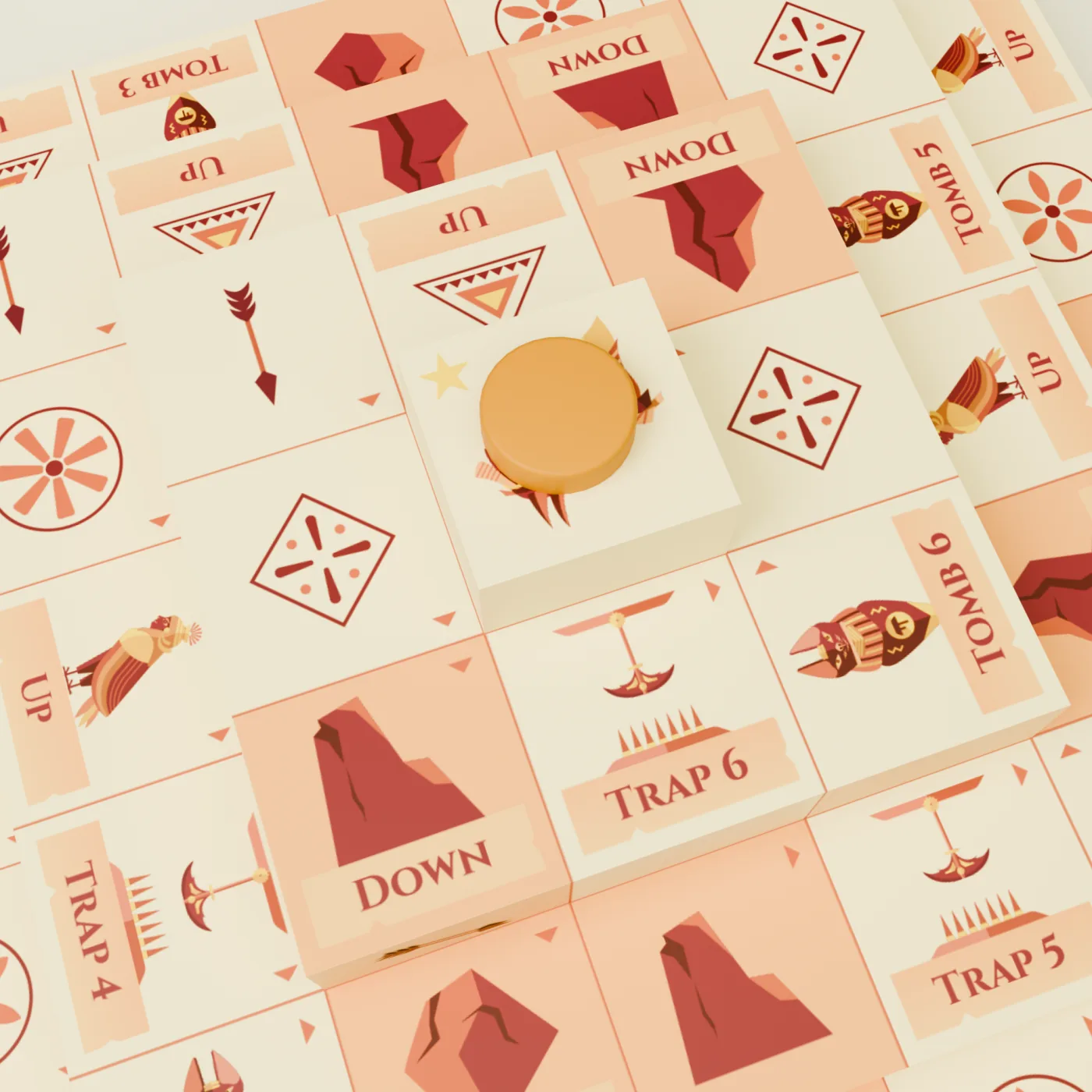
One of the most rewarding aspects of the project was creating a believable visual universe. Every element needed to feel like part of the same world:

  • Characters
  • Symbols
  • Architecture
  • Environments
  • Cards
  • Packaging

Rather than designing isolated components, the focus was on building a cohesive system that supported immersion and storytelling.

Design system — image coming soon
Palette, icons, typography and symbols, gathered in one place
Character gallery — image coming soon
The full cast, on one page
Card evolution — image coming soon
Early and final versions of the cards, side by side

Worldbuilding

The whole world, top to bottom.

The full campaign graphic, as it ships — the story, the core box, the temple and its gods, the characters and their hieroglyphs. Take your time; it is a long way down the Nile.

05 — Information design through play

Complexity,
made approachable.

Many of the design challenges resembled challenges found in digital products.

Players need to:

  • Learn quickly
  • Understand symbols
  • Navigate information
  • Make decisions confidently

This required careful consideration of:

  • Visual hierarchy
  • Iconography
  • Layout systems
  • Readability
  • Information density

The goal was always to make complexity feel approachable.

Information architecture — image coming soon
How symbols, rules and cards are built up

The process

From idea to production.

From a first idea to a box ready for manufacturing, the game moved through the same loop a good product does — make something, test it, refine it, and only then commit it to print.

  1. Idea
  2. Prototype
  3. Testing
  4. Iteration
  5. Illustration
  6. Production

06 — Reflection

Complete experiences,
not single parts.

The Pyramid taught me how closely design and user experience are connected.

A successful board game is not only defined by its mechanics, but by how clearly players understand, navigate and interact with the system.

The project strengthened my skills in storytelling, visual systems, prototyping, information architecture and iterative design.

Most importantly, it reinforced the value of designing complete experiences rather than individual deliverables.